Skip to content

Social media for accounting and tax practices, written and ready to post

Answer the questions clients bring you, before they ask them.

You approve every post. Nothing publishes automatically.

Built to help you:

  • Grow your audience
  • Outcompete everyone
  • Sell more
Choose a platform

Example accounting practice

Sample
CommentShareSave

Example accounting practice The IRS says tax is paid as you earn it, through the year.

moreless

If you're in business for yourself, that generally means estimated tax payments.

One detail the slides skipped: individuals, estates and trusts use Form 2210 to see if they owe a penalty for underpaying estimated tax. Corporations use Form 2220.

The IRS also describes a waiver if you retired after reaching age 62, or became disabled, during the tax year payments were required or the preceding tax year, and the underpayment was due to reasonable cause and not willful neglect. The Form 2210 instructions explain how to request it.

#estimatedtaxes #selfemployedtaxes #taxplanning

  1. Example accounting practice · Sample1/3

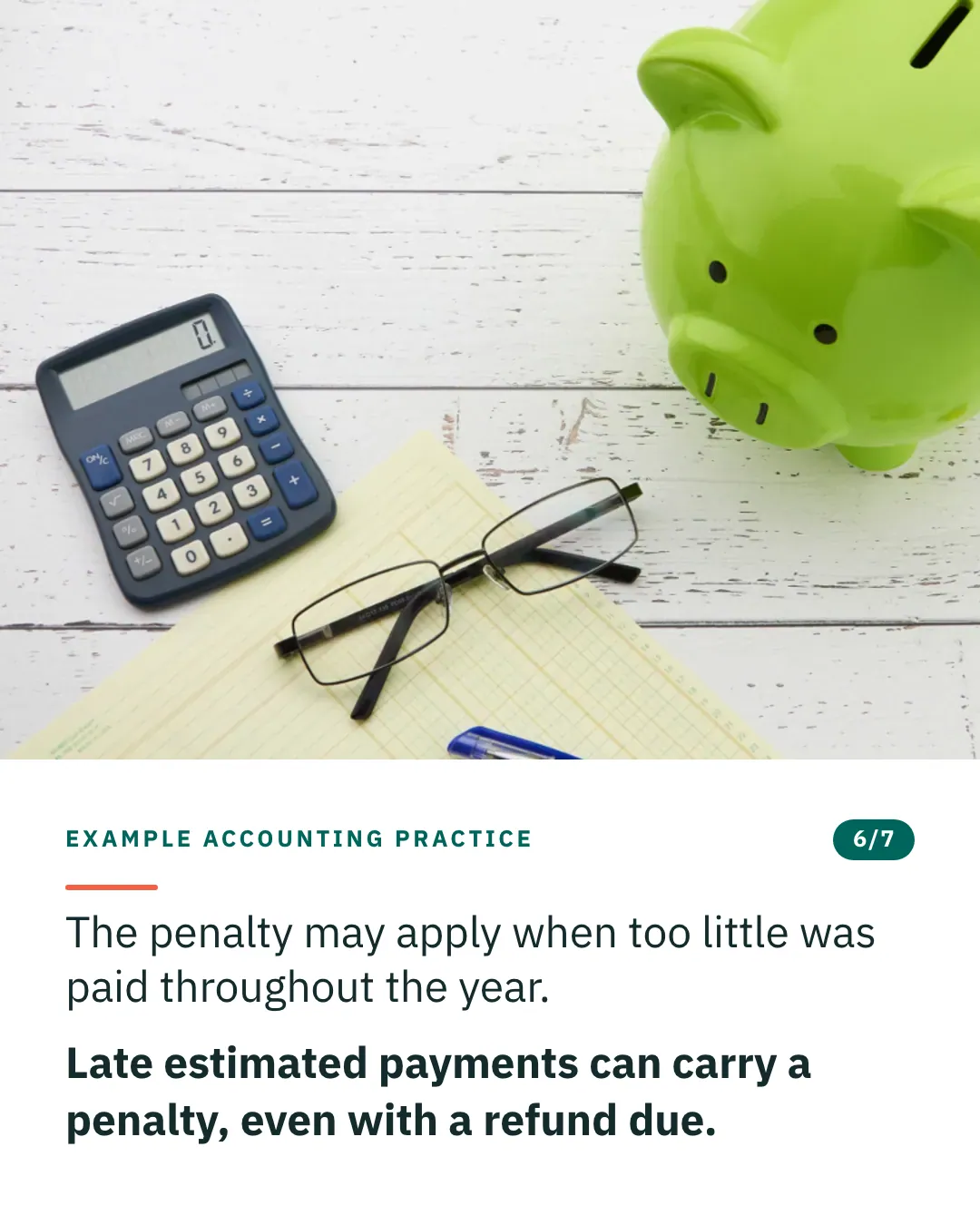
    You can be due a refund and still owe a penalty. The IRS says a penalty may apply if your estimated tax payments are late, even when a refund is due at filing.

    The refund that still costs you
    ReplyRepostShare
Show this threadHide this thread
  1. Example accounting practice · Sample2/3

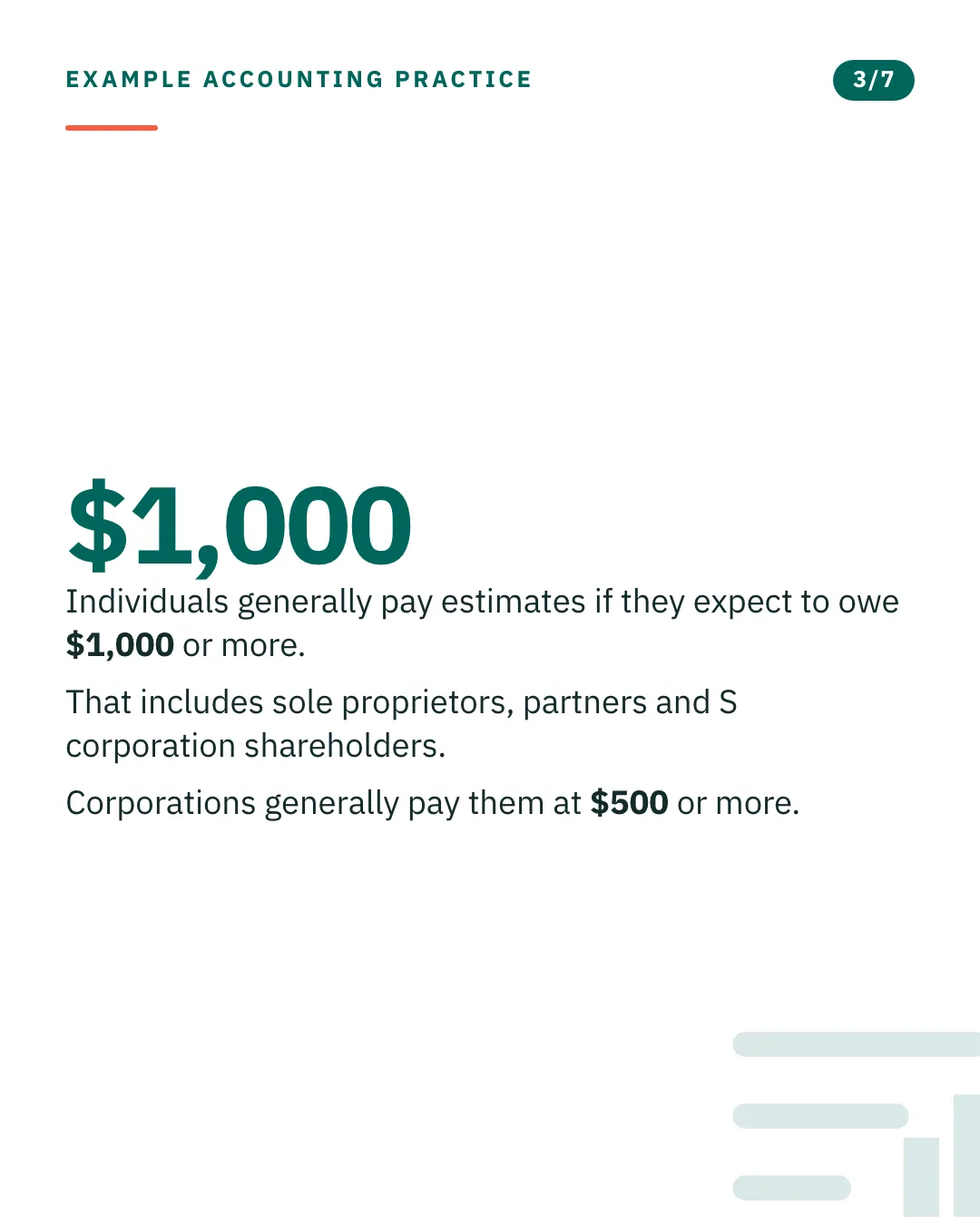
    Who pays estimates? The IRS says individuals, including sole proprietors, partners and S corporation shareholders, generally do if they expect to owe $1,000 or more. Corporations generally do at $500 or more.

    ReplyRepostShare
  2. Example accounting practice · Sample3/3

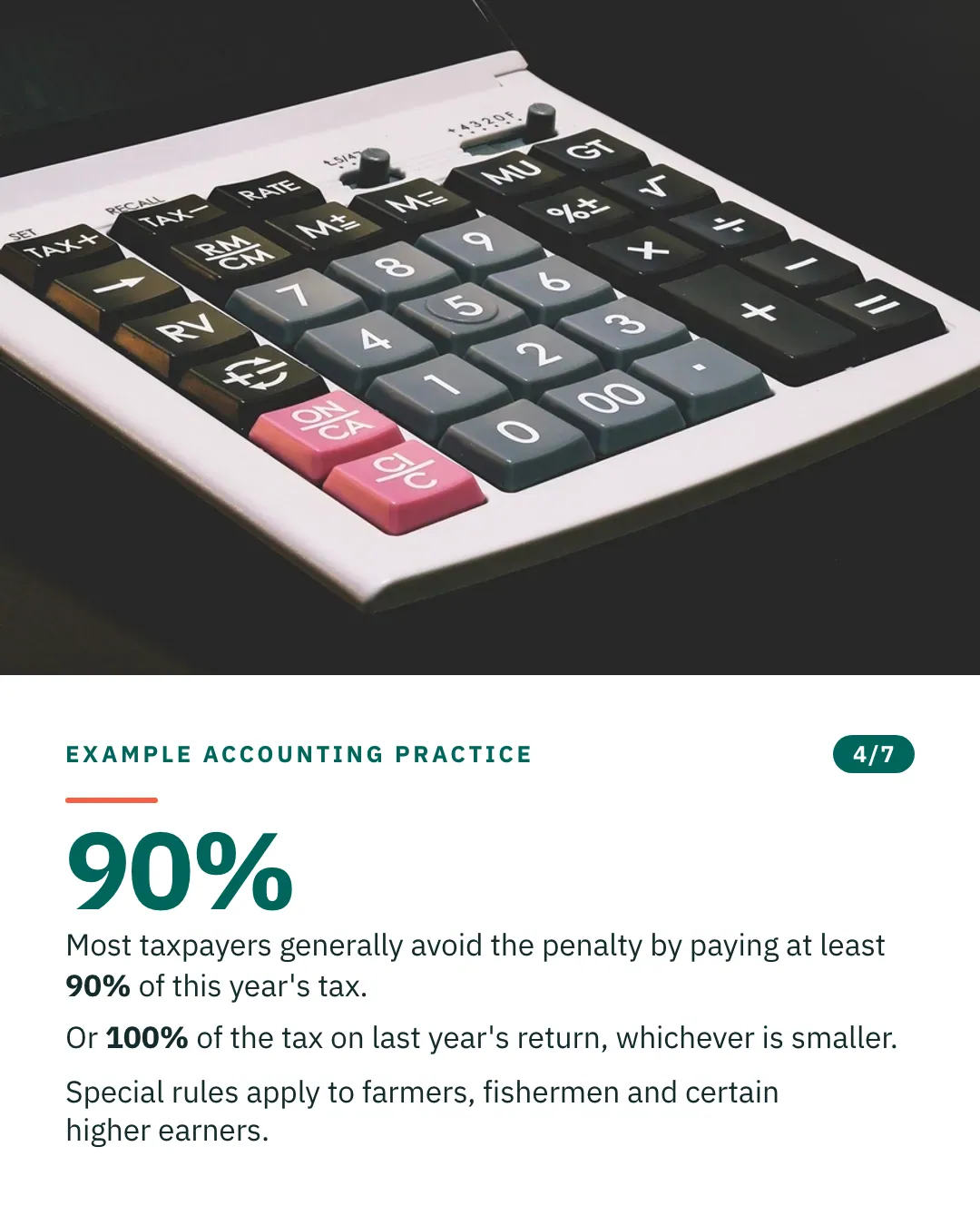
    Most taxpayers generally avoid the underpayment penalty by paying at least 90% of this year's tax, or 100% of the tax on last year's return, whichever is smaller. Special rules apply to farmers, fishermen and certain higher income taxpayers.

    ReplyRepostShare

Example accounting practice

Sample · not published
Due a refund, you may still owe an estimated tax penalty.

…see moresee less

The IRS says tax is paid as you earn it, through the year.

If you're in business for yourself, that generally means estimated tax payments.

The IRS also describes a waiver if you retired after reaching age 62, or became disabled, during the tax year payments were required or the preceding tax year, and the underpayment was due to reasonable cause and not willful neglect. The Form 2210 instructions explain how to request it.

How does your business check that its tax payments are keeping pace with its income?

The refund that still costs you
CommentShare

Example accounting practice

Sample · not published
Due a refund, you may still owe an estimated tax penalty.

…see moresee less

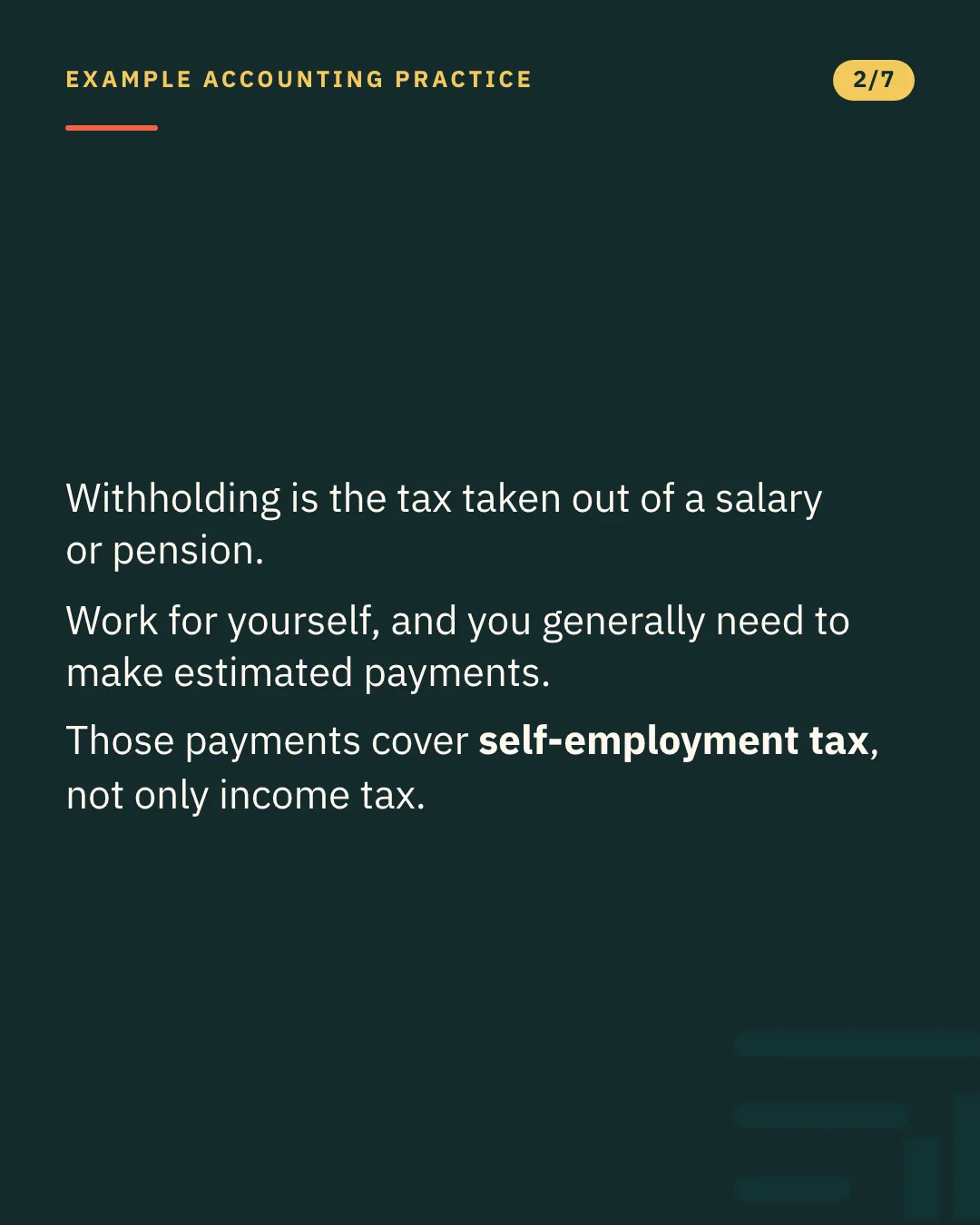
The IRS says taxes must be paid as income is earned, through withholding or estimated tax payments. Late estimated payments can carry a penalty even when a refund is due at filing.

For owners, the thresholds matter. Individuals, including sole proprietors, partners and S corporation shareholders, generally make estimated payments if they expect to owe $1,000 or more. Corporations generally do at $500 or more.

According to the IRS, most taxpayers generally avoid the underpayment penalty if they paid at least 90% of this year's tax, or 100% of the tax on last year's return, whichever is smaller. Special rules apply to farmers, fishermen and certain higher income taxpayers.

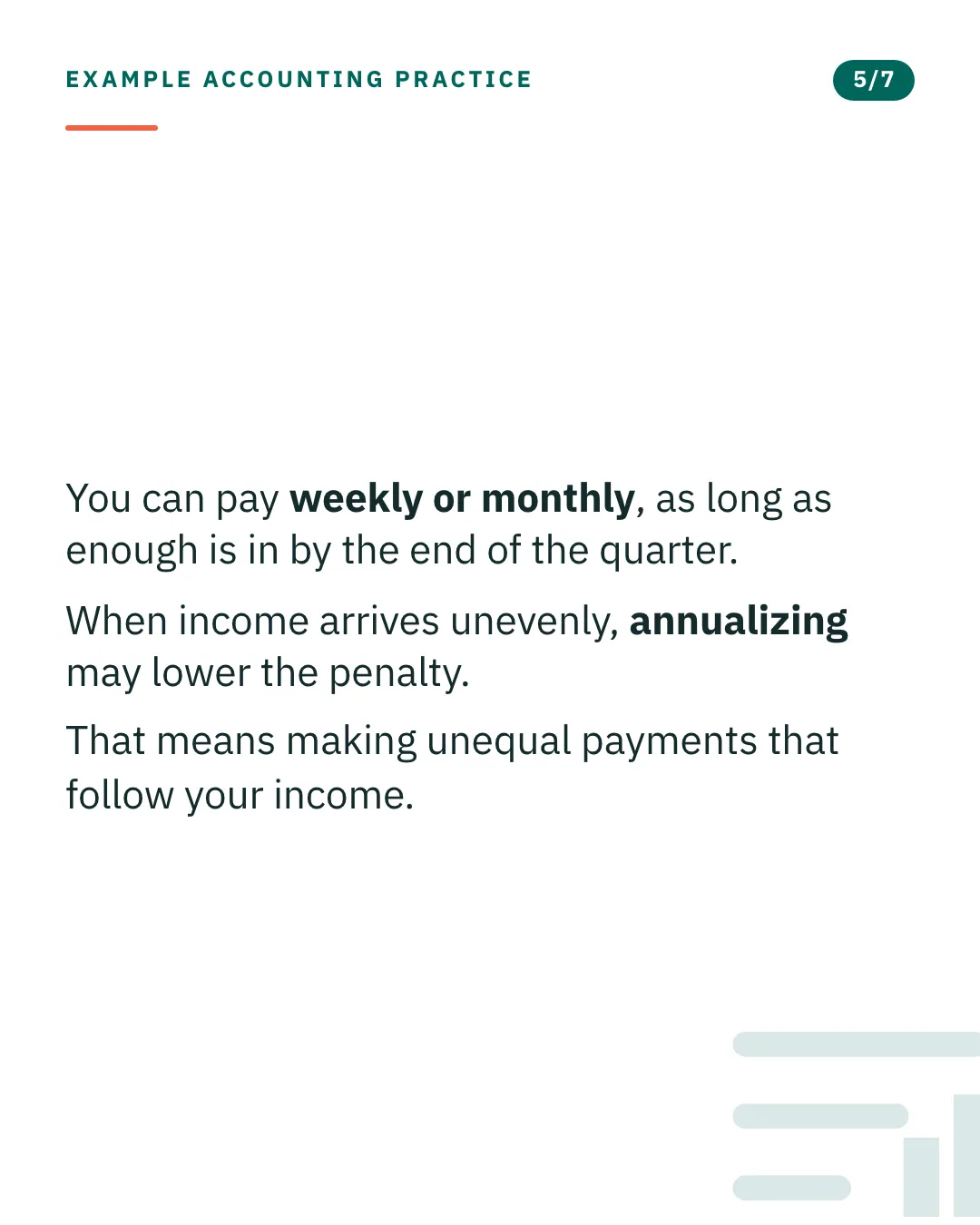
When income arrives unevenly, the IRS says annualizing it and making unequal payments may avoid or lower the penalty.

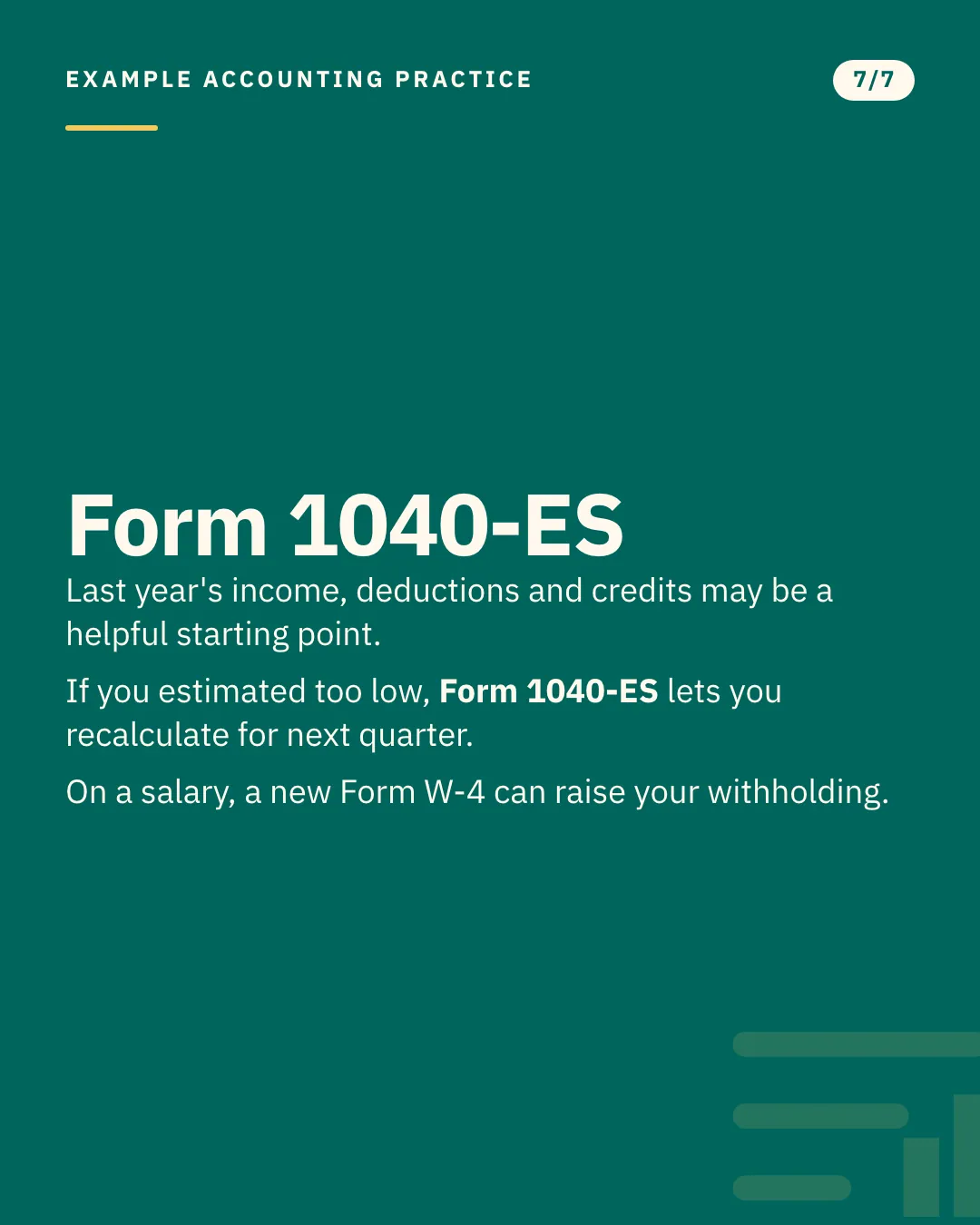
For households on salaries and wages, the IRS points to a new Form W-4 as a way to have more tax withheld.

How does your business check that its tax payments are keeping pace with its income?

The refund that still costs you
CommentRepostSend

An example post for accounting and tax practices. We write for any local business.

From your business to finished posts.

You receive finished work, not software to operate.

  1. We learn your business

    Who you serve, how you sound, what you cannot say.

  2. We find what is worth saying

    Questions your audience will recognise this week.

  3. We write and check it

    Words per channel, pictures beside them, claims verified.

  4. You approve and post

    Approve it, ask for a repair, or pick another.

Another post we wrote for accounting and tax practices.

Your 2026 employer childcare credit. 2026 employer benefit limits: childcare credit, health FSA, commuter.

The facts in it come from IRS releases tax inflation adjustments for tax year 2026, including amendments from the One, Big, Beautiful Bill | Internal Revenue Service.

Join the waitlist
Choose a platform

Example accounting practice

Sample
CommentShareSave

Example accounting practice One 2026 tax change for employers goes from $150,000 to $500,000.

moreless

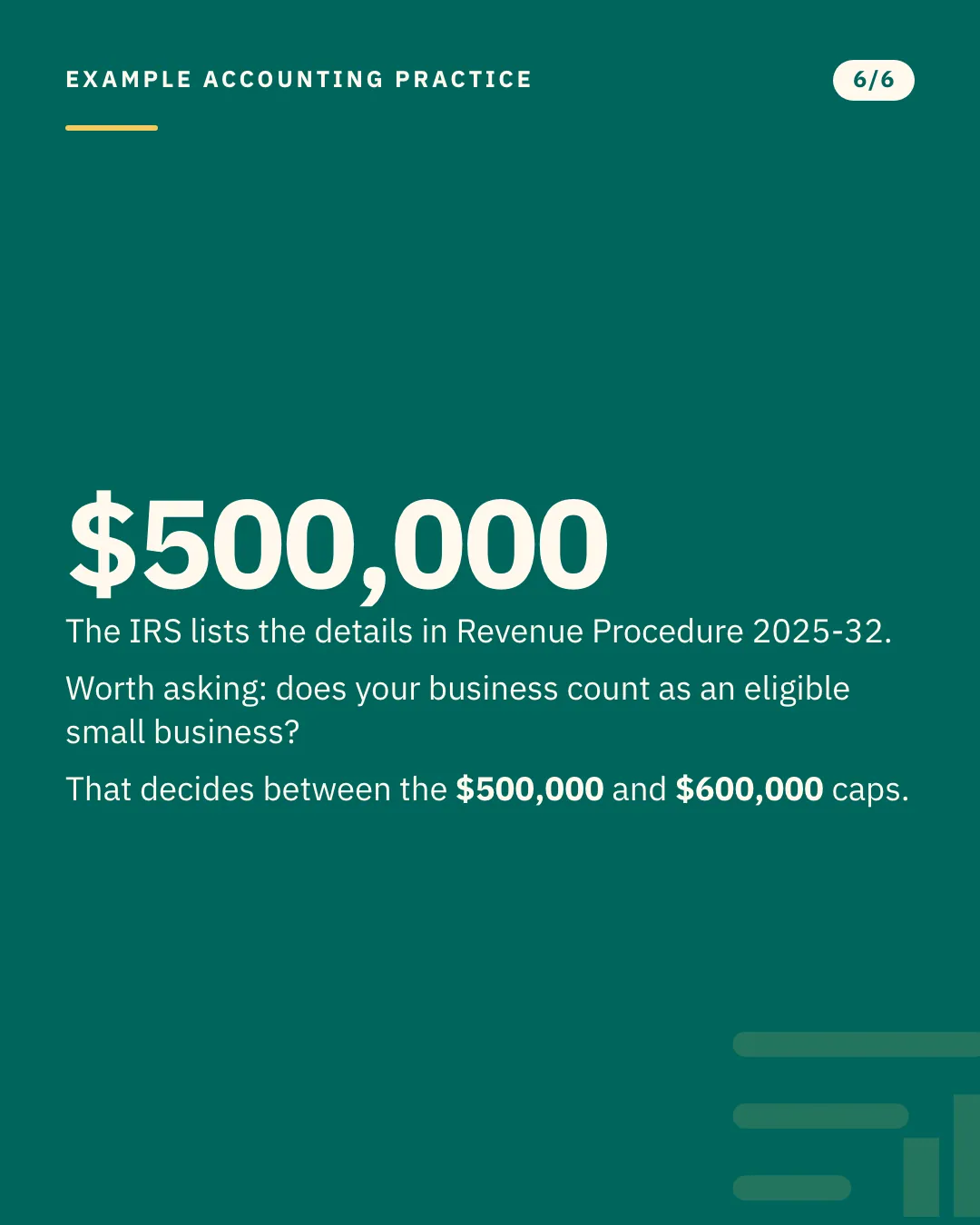
The IRS says the maximum employer-provided childcare tax credit rises to $500,000 for tax year 2026, or $600,000 if the employer is an eligible small business.

One more number the slides skipped: for cafeteria plans that permit carryover, the maximum carryover of unused FSA amounts is $680.

#childcaretaxcredit #employeebenefits #taxplanning

  1. Example accounting practice · Sample1/3

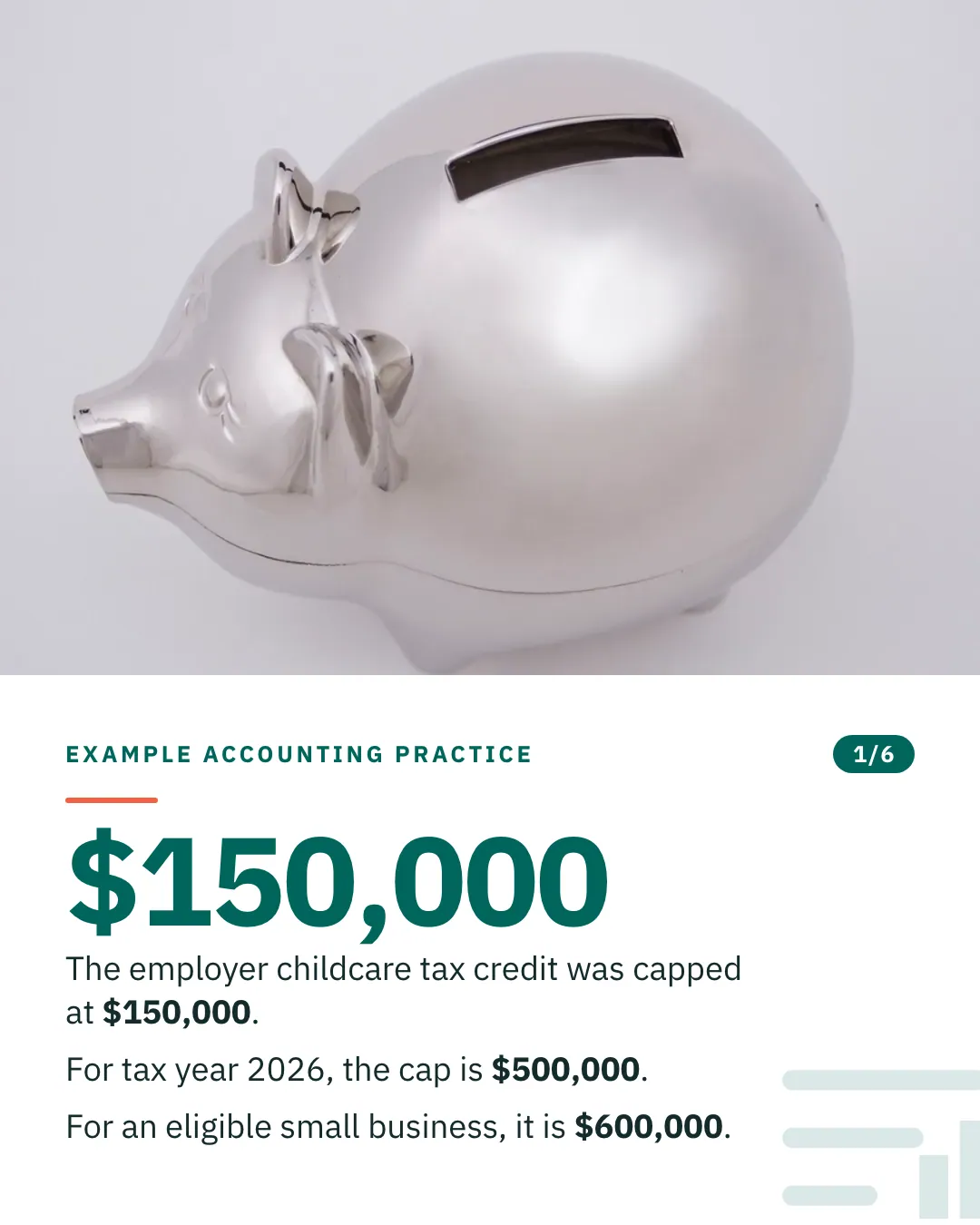
    The maximum employer-provided childcare tax credit goes from $150,000 to $500,000 for tax year 2026, the IRS says. For an eligible small business, the cap is $600,000.

    Your 2026 employer childcare credit
    ReplyRepostShare
Show this threadHide this thread
  1. Example accounting practice · Sample2/3

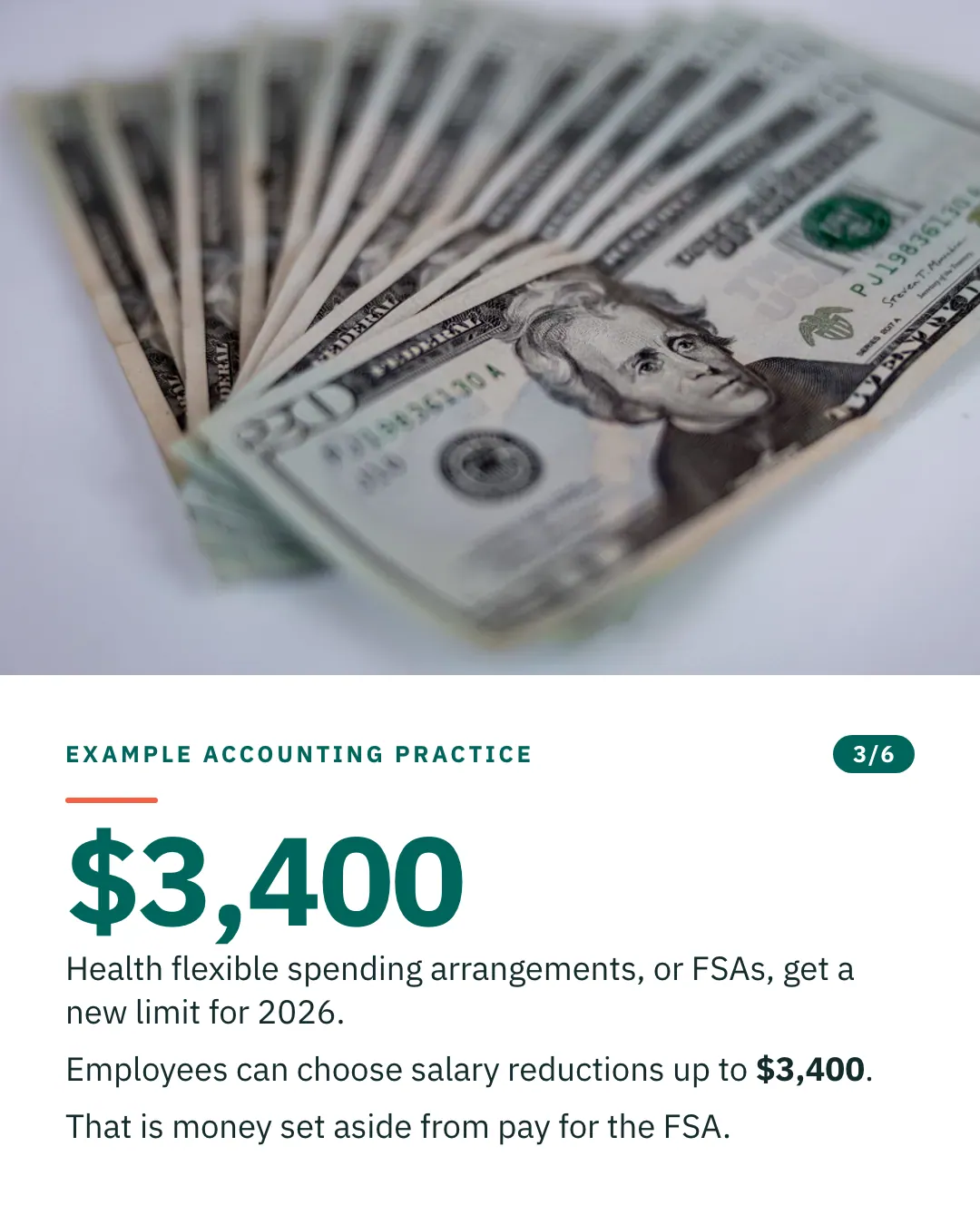
    Health FSAs have a new 2026 limit too: employees can choose salary reductions of up to $3,400 for health flexible spending arrangements, per the IRS.

    ReplyRepostShare
  2. Example accounting practice · Sample3/3

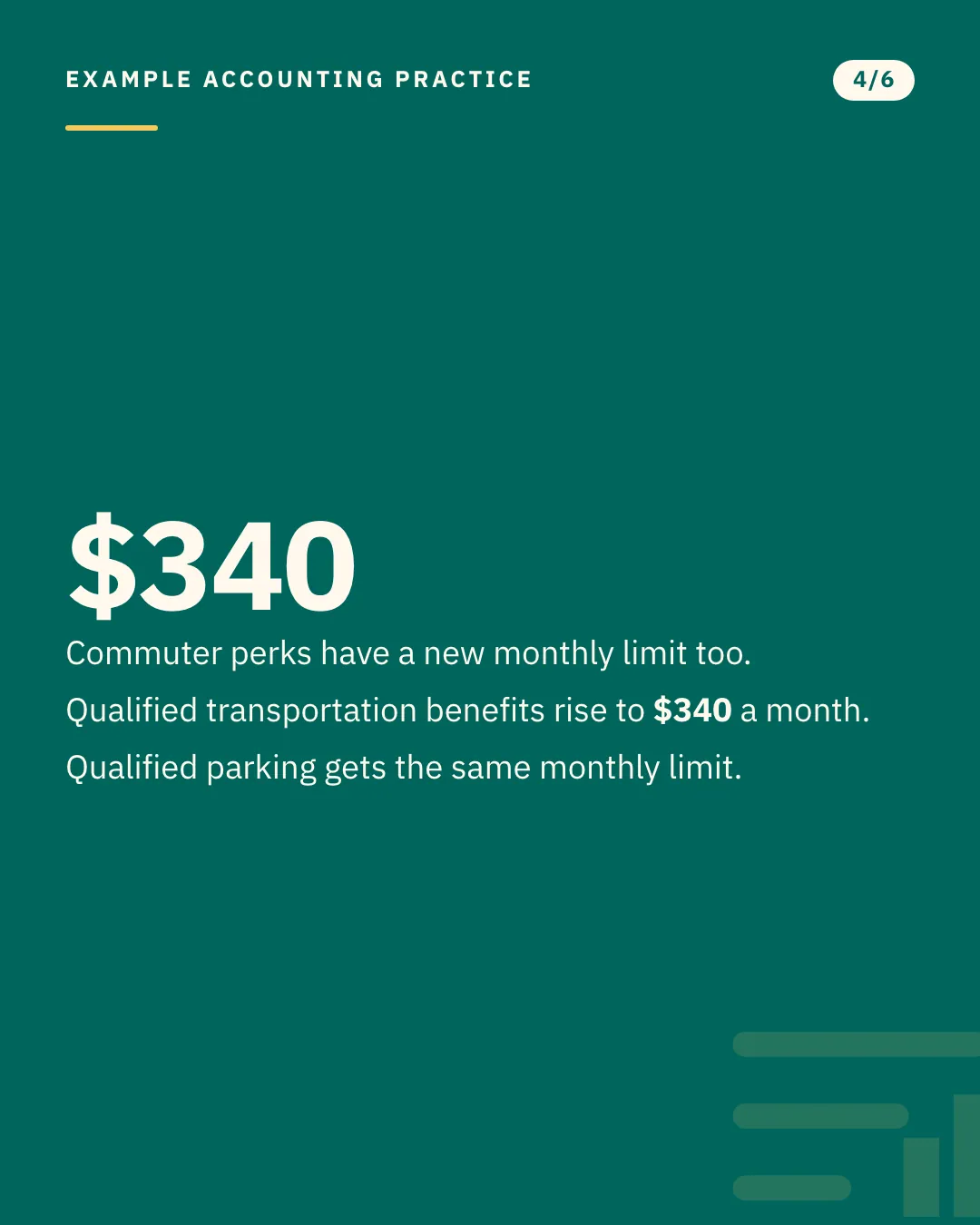
    Commuter perks: for tax year 2026, the IRS sets the monthly limit for qualified transportation benefits and qualified parking at $340.

    ReplyRepostShare

Example accounting practice

Sample · not published
One employer tax credit cap jumps from $150,000 to $500,000.

…see moresee less

One 2026 tax change for employers goes from $150,000 to $500,000.

The IRS says the maximum employer-provided childcare tax credit rises to $500,000 for tax year 2026, or $600,000 if the employer is an eligible small business.

Which benefit is your team reviewing before year-end?

Your 2026 employer childcare credit
CommentShare

Example accounting practice

Sample · not published
One employer tax credit cap jumps from $150,000 to $500,000.

…see moresee less

For tax year 2026, the IRS says the maximum employer-provided childcare tax credit rises to $500,000. If the employer is an eligible small business, the cap is $600,000.

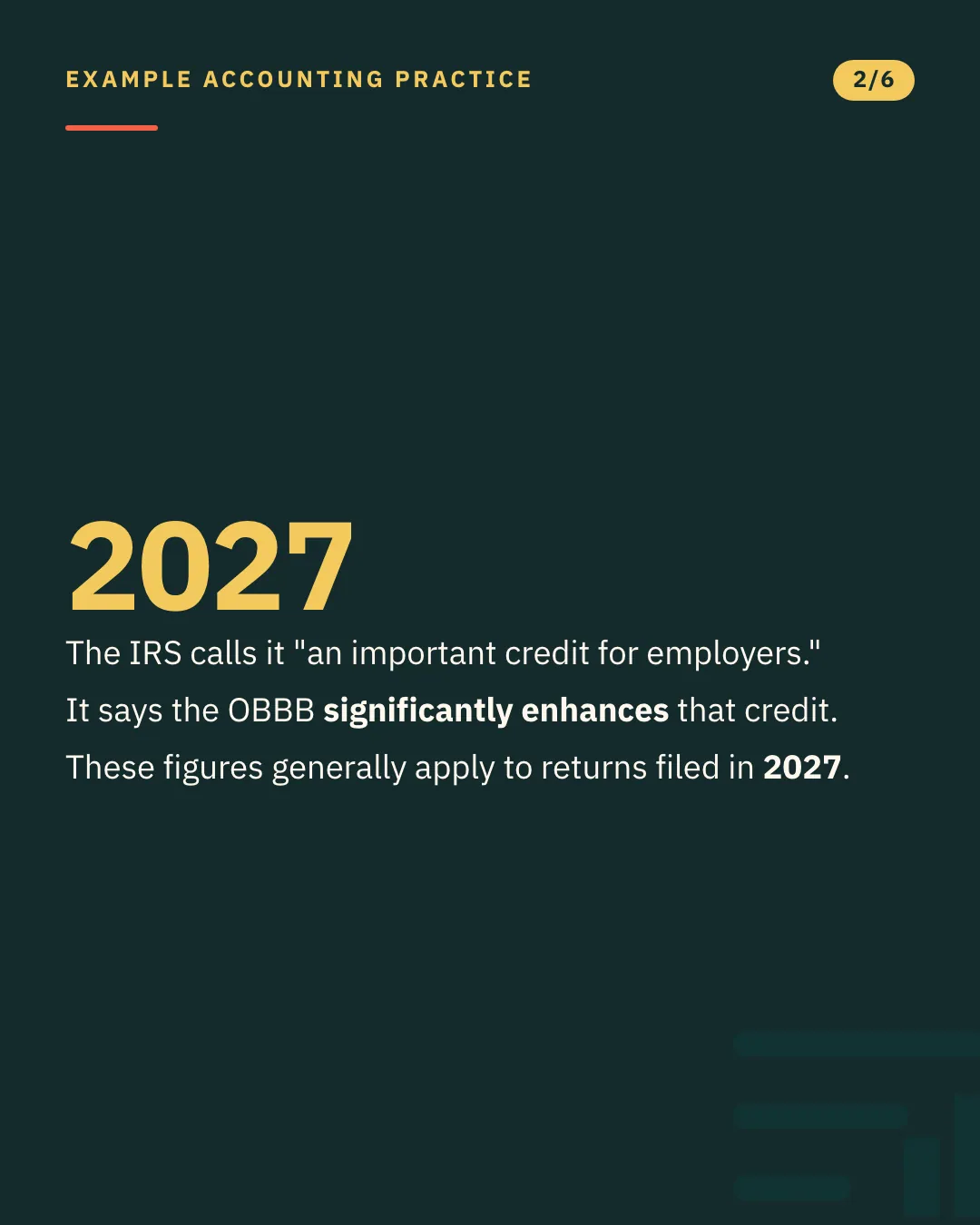
The IRS describes this as the OBBB significantly enhancing an important credit for employers.

Those adjustments generally apply to tax returns filed in 2027.

Other benefit limits moved as well. Voluntary employee salary reductions for health flexible spending arrangements can reach $3,400.

The monthly limit for the qualified transportation fringe benefit and for qualified parking rises to $340.

For cafeteria plans that permit carryover, the maximum carryover of unused amounts is $680.

For anyone who runs a practice or a company, a benefits package is also a set of tax numbers. Whether your business counts as an eligible small business is a question for an accountant who knows your books.

Which benefit is your team reviewing before year-end?

Your 2026 employer childcare credit
CommentRepostSend

An example post for accounting and tax practices. We write for any local business.

What arrives, every week.

  • We read your own pages and write from them.
  • Finished posts for each channel, with their pictures.
  • Every claim quoted from a page you can open.
  • You approve. Nothing publishes on its own.

Questions

Do you publish for me?

No. We prepare the posts and you approve them. Nothing publishes automatically.

Do you understand accounting and tax practices?

We learn your business from your own pages, and a post says about you only what they support. Its other facts come from public sources it names, which you can open.

What do I actually receive?

Finished posts for each channel, with their pictures, ready for you to approve and post.

What does it cost?

Three monthly plans, from $99 a month. See the plans

Choose how often you post.

A long post is one researched topic, finished for each channel your plan covers.

Every plan includes

  • Business-relevant topic research
  • Finished posts for each channel, with their pictures
  • Claim, quality, and fit checks
  • Ready for your approval

Presence

A concrete, low-friction start

$99per month

Up to 4 long posts a week

Up to 16 long posts a month

Prepared for 2 selected channels

Plus short posts on X, rolling out: up to 1 a day, 30 a month.

Join the waitlist for Presence

Authority

Higher-volume visibility

$249per month

Up to 2 long posts a day, 14 a week

Up to 60 long posts a month

Prepared for up to 4 selected channels

Plus short posts on X, rolling out: up to 4 a day, 120 a month.

Join the waitlist for Authority

Only delivered posts that pass our checks count against your allowance. Failed drafts and repairs never do.

Stop managing content. Start reviewing finished work.

We bring the words, the pictures and the checks. You approve, and you post.
Join the waitlist
Papergale

Finished content, researched and checked before it reaches you.

Privacy© 2026 Papergale